The 5 Biggest Pantry Storage Mistakes (And How to Fix Them Before You Waste More Food)
If you've ever opened your pantry and felt that sinking feeling of uncertainty (is this flour still good? When did I buy these beans? Should I just throw this out to be safe?) you're not alone. I've been there, staring at containers I bought with good intentions, only to realize months later that something went stale, grew mold, or quietly turned into expensive compost.
Pantry preservation can feel overwhelming because there are so many opinions flying around. Glass versus plastic. Vacuum sealing versus mason jars. Five-gallon buckets, mylar bags, airtight bins, color-coded labels, oxygen absorbers, desiccant packets. The list goes on and on until it starts to feel like if you choose the wrong storage method, you're guaranteed to lose food and money.
Most food waste in home pantries doesn't come from doing nothing. It comes from doing too much or from choosing storage systems that sound good in theory but don't match how food actually behaves in real life. You know what I mean. Buying all the fancy containers because someone online swore by them, only to find out they don't work for what you're actually storing.
This post walks you through the most common pantry storage mistakes I see beginners make (and that I've made myself), and how to avoid them so you can feel confident that your storage method is based on actual food science, not fear.
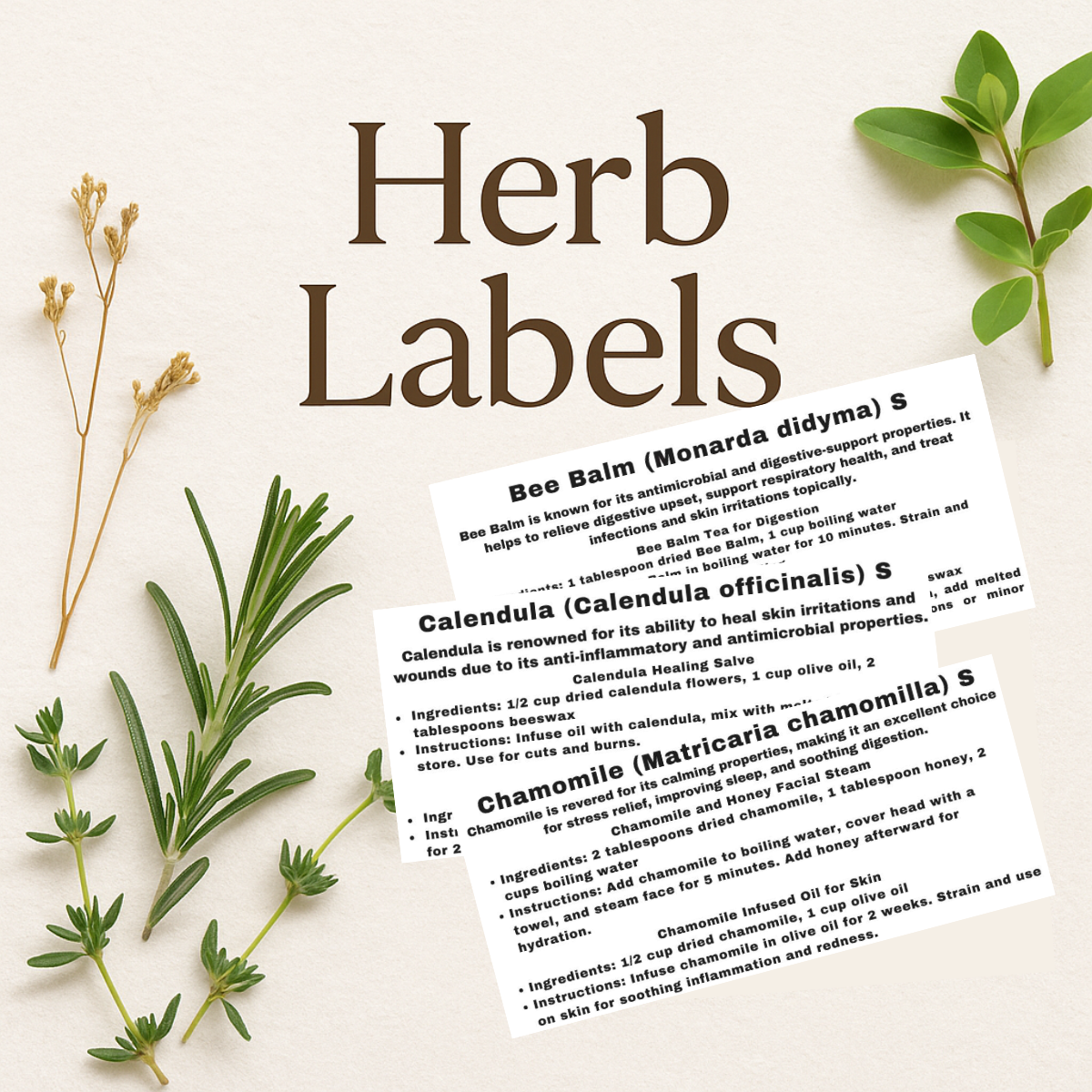
Learn about Herbalism with Ease!
Elevate your herbal knowledge with our Herbal Identification Labels! These labels simplify herbal identification with detailed information and uses. Ideal for novices and beginners wishing to deepen their knowledge of common herbs and their usage, they provide a comprehensive approach to herbal identification and use. Start exploring her
Printable Herb Labels – 4x2 Inch Format
This digital label set includes clear, easy-to-read labels for your home apothecary or herb cabinet. Each label was designed to be both beautiful and functional, offering essential details at a glance to keep your dried herbs and tincture ingredients organized.
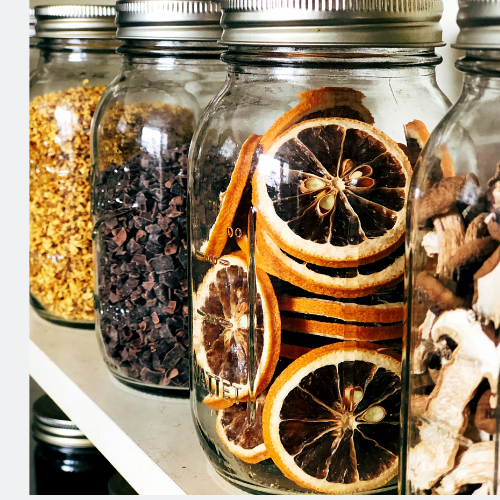
Created with the home herbalist in mind, these labels are perfect for mason jars, spice jars, paper bags, and storage tins.
What’s Included
A printable PDF file with over 40 labels for herbs, roots, and mushrooms including classics like Chamomile and Lavender, but also new herbs to explore like Meadowsweet and Skullcap.
Each label includes:
– Common name
– Scientific name
– Function (Primary, Supportive, or Active)
– Common uses
– Two simple traditional use recipesSized for 4x2 inch adhesive labels or printable sheets
Designed for home printing in black and white to reduce ink use
How to Use
Print at home on 4x2 inch label sheets or plain paper. Trim and tape, glue, or adhere to jars as needed. These labels are a great addition to herbal kits, medicine-making supplies, or pantry storage.
Why It’s Useful
Having a summary of the herbs information and two quick recipes on every jar of herbs will encourage you to use them. It also helps prevent confusion and supports safe, confident use. These labels were designed by someone who regularly works with herbs and knows how helpful it is to have key information right at your fingertips.
Delivery
You’ll receive an instant download of the PDF file after purchase. Print as many copies as you need for your personal use.
Build your apothecary with confidence and clarity.
Download your printable labels and start organizing your herbal supplies today.
Disclosure
Some links on FiberMaiden are affiliate links. When you click and purchase, I may earn a small commission at no extra cost to you. I partner only with brands and tools I trust and use in my own kitchen, studio, and garden. Your support means a lot.
Mistake 1: Storing Everything the Same Way (Because Not All Food Ages the Same)
This is probably the biggest mistake I see, and it makes sense why people do it. You go to the store, you buy a bunch of matching containers because they look nice and organized, and you assume that what works for rice will work for flour, sugar, oats, and everything else.
Not all foods age the same way. Not even close.
Dry grains, flour, sugar, dehydrated foods, and freeze-dried foods all have different moisture levels, fat content, and oxygen needs. When you treat them all the same, you're setting yourself up for spoilage because each type of food has its own vulnerabilities.
Here's a real example. Wheat berries (whole, unprocessed wheat kernels) can store beautifully for years when they're protected from moisture and oxygen. We're talking decades if done right. Flour has a much shorter shelf life even under ideal conditions because those oils in the grain are exposed after grinding. Different food, different storage strategy.
If you want a deeper breakdown of why whole grains behave so differently than processed ones, I wrote a guide on How to Store Wheat Berries for Long Term Use that explains exactly what makes them so stable and how to keep them that way.
The fix: Match your storage method to the food itself, not to whatever container trend is popular. Ask yourself what that specific food needs. Is it high in fat? Does it absorb moisture easily? Will oxygen make it go rancid? Then choose your storage accordingly.
Mistake 2: Ignoring Oxygen Exposure (The Silent Food Killer)
Oxygen is one of the biggest drivers of food spoilage. It causes oxidation, which makes fats go rancid, destroys vitamins, changes colors and flavors, and speeds up everything you don't want happening to your pantry items. A lot of food that people think "just went bad" actually went stale or rancid long before it should have because oxygen was never controlled.
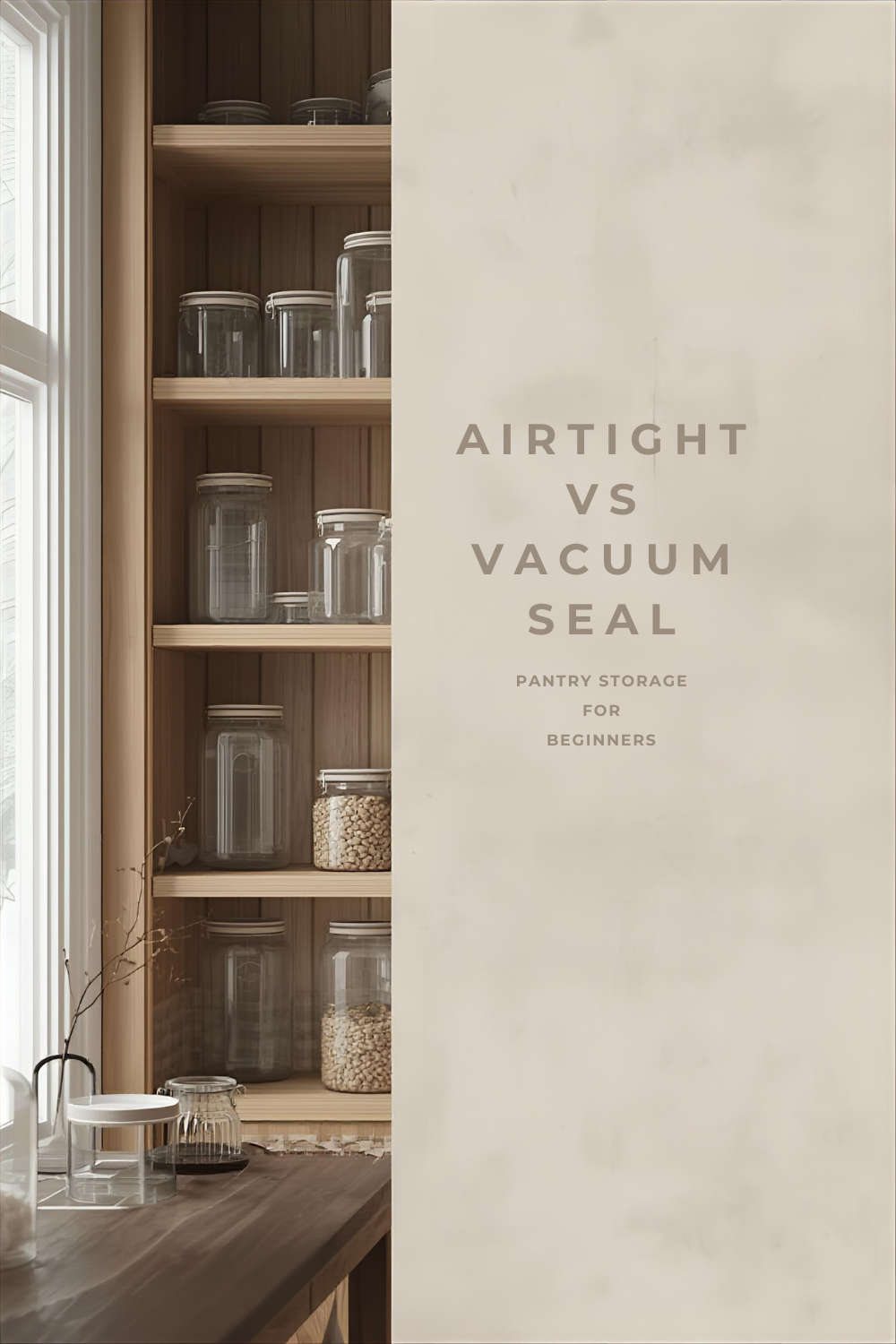
Vacuum sealing, oxygen absorbers, and airtight containers all sound like they do the same thing, but they serve different purposes. Using the wrong one for the wrong food can shorten shelf life instead of extending it.
Freeze-dried foods are a good example. They're shelf-stable when stored correctly, but without proper oxygen control, they lose quality fast. The texture gets weird, the flavors fade, and you're left wondering why you spent all that time or money freeze-drying in the first place.
This is why freeze-drying at home changes how food storage works, which I get into in my post Freeze Drying at Home: My Experience with the Harvest Right Medium. Once you understand what oxygen does and how to remove it, everything clicks into place.
The fix: Learn the difference between oxygen removal methods and when to use each one. Vacuum sealing works great for some things, oxygen absorbers work better for others, and sometimes an airtight container is all you need. It's not about having every tool. It's about using the right tool for what you're storing.
Mistake 3: Choosing Containers Before Choosing a System (The Expensive Cart-Before-Horse Problem)
This one is easy to do, especially when you're first getting excited about food storage and you see all these beautiful organized pantries online.
Buying containers first, before you've figured out what you're actually storing, how much of it you need, and how you'll realistically use it, is one of the most expensive beginner mistakes you can make. I know because I did it. Buckets, jars, specialty bins, vacuum seal bags all add up fast, and a lot of it ends up sitting empty in your garage because it doesn't fit how you cook and eat.
Before you buy a single container, ask yourself some questions:
How much of each food do I realistically need to store?
How often do I actually use this ingredient?
Do I need long-term storage (years) or medium-term rotation (months)?
Will I be accessing this daily, weekly, or almost never?
A system that works for storing 50 pounds of bulk grains is different from what works for your everyday pantry staples. And if you're getting into preservation methods like pressure canning, you've got a different set of storage considerations once that food is safely preserved.
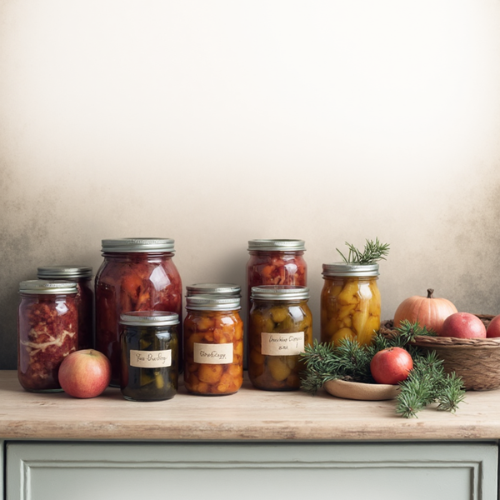
For example, if you're pressure canning green beans or other vegetables, you don't need oxygen absorbers or fancy sealed containers afterward. You need cool, dark shelf space and a good rotation system. I walk through exactly how that works in my beginner guide on How to Pressure Can Green Beans, because storage expectations are different once food is already safely preserved in jars.
The fix: Start with your actual food storage goals and habits, then choose containers that support that system. Don't let pretty containers dictate how you store food. It should be the other way around.
Mistake 4: Overlooking Temperature and Light (The Free Fix Everyone Skips)
Where you physically store your food matters just as much as what you store it in.
Heat and light slowly break down food quality over time. Even if your container is perfectly airtight, even if you used oxygen absorbers, even if you did everything else right, storing those jars or bags near your oven, next to a sunny window, or out in an unconditioned garage where temperatures swing wildly speeds up spoilage. Heat accelerates chemical reactions. Light degrades nutrients and causes color changes. Together, they work against everything you're trying to accomplish.
A cool, dark pantry space or closet is more important than fancy containers. A location upgrade often protects your food better than expensive containers.
Most traditional root cellars and food storage spaces were cool, dark, and consistent in temperature for a reason. Our grandparents didn't have vacuum sealers and oxygen absorbers, but they understood that keeping food in the right environment was half the battle.
The fix: Audit where you're currently storing food. Is it near heat sources? Is sunlight hitting it for part of the day? Is the temperature relatively stable? Moving things to a different closet, basement shelf, or interior pantry space can add months or even years to your food's shelf life, and it costs nothing.
Mistake 5: Not Labeling or Rotating Food (Or How to Turn Good Food Into Garbage)
Even perfectly stored food can go to waste if you forget when you stored it, what's in that container, or which batch is older.
Unlabeled containers create guesswork and anxiety. You stand there looking at identical jars of white stuff thinking, "Is this flour or powdered sugar? Was this from 2023 or 2024? Should I just throw it out to be safe?" A lot of people do throw it out, which means all that careful storage work was for nothing.
Labeling feels like the boring part of food storage. It's not as exciting as learning about oxygen absorbers or buying new containers. But this simple step is what makes your whole system work in real life.
Here's what happens when you label consistently:
You can rotate your stock naturally (oldest in front, newest in back) FIFO (First In First Out)
You know exactly when to use something before quality declines
You can make informed decisions instead of panicking and wasting food
You trust your own system, which means you'll use what you store
You don't need anything fancy. Masking tape and a permanent marker work great. A label maker if you want to get organized. At minimum, write the contents and the date you stored it. If you want to level up, add the "best by" date or a note about what it's for.
The fix: Make labeling part of your storage routine, not an optional extra step. The five seconds it takes to label a container will save you from wasting food, second-guessing yourself, and throwing away money later.
The Bottom Line: Pantry Preservation Doesn't Need to Be Perfect to Be Effective
Your pantry preservation system doesn't need to be perfect, Pinterest-worthy, or Instagram-ready to work.
It needs to be thoughtful and aligned with how food actually behaves over time. That's it.
You don't need every gadget. You don't need color-coded labels and matching containers. You don't need to do everything at once or follow someone else's system exactly. What you need is to understand what you're storing, why it spoils, and how to create simple barriers against the things that cause spoilage: oxygen, moisture, heat, light, and time.
When you approach food storage from that angle, when it's based on understanding rather than fear or trends, everything gets easier and your confidence grows.
Your Next Step
Don't try to overhaul your entire pantry today. That's overwhelming.
Instead, choose one pantry item that you use regularly. Maybe it's flour, rice, oats, dried beans, or something you've been storing in its original bag.
Evaluate whether your current storage method matches what that food needs. Is it protected from oxygen if it needs to be? Is it away from heat and light? Is it labeled so you'll know when to use it?
Make one small adjustment based on what you learned in this post. Just one. That small change will create long-term confidence and less waste.
Food storage isn't about perfection. It's about making thoughtful decisions that add up over time, reducing waste, and knowing that when you reach into your pantry, what you pull out is still good to use.
Looking for more practical food preservation guidance? Check out my other posts on wheat berry storage, freeze-drying basics, and pressure canning for beginners.