How We Powered Our Off-Grid Ranch Build with a Temporary Solar Setup
Building an off-grid homestead isn't something you just flip a switch and suddenly have power for. It's a process. And during that process, you still need electricity to actually get work done. That's where our temporary solar system came in, and honestly, it's been one of the smartest decisions we made during this whole build.
When we first arrived at our raw land in the desert, we had nothing. No buildings, no infrastructure, no power lines for miles. But we had work to do. A lot of work. We needed to run power tools, charge equipment, keep our computers running for planning and communication, and maintain some basic quality of life while living and working on the property.
The traditional approach would be running a gas generator all day, every day. And sure, we have a generator as backup, but the thought of constantly buying fuel, dealing with noise and fumes, and burning through gas or propane just to check email or charge a drill battery? That didn't make sense to us.
We also weren't ready to install our permanent solar system. You can't design and build a major electrical infrastructure before you even know where your buildings will sit or what your actual daily power consumption looks like. We needed real-world data. We needed flexibility. And we needed power yesterday, not six months from now after installation.
That's when we decided on a phased power strategy using portable solar generators. This setup gave us the ability to generate and store our own power immediately, learn our actual energy needs over time, and keep working without interruption while we planned and built out the permanent system.
Years into this approach, I can tell you it's been absolutely worth it. We've maintained continuous power through desert heat, windstorms, and the occasional cloudy stretch. We've powered everything from internet equipment to power tools without missing a beat. And we've gathered invaluable data about our energy usage that's helping us size our permanent array correctly.
Let me walk you through exactly what we're using, how it's working for us day to day, why this phased approach to power has kept our ranch running smoothly, and what we've learned that might help you if you're planning your own off-grid build.

Beginner Guide to Food Preservation
This guide is a simple, approachable introduction to preserving food at home. Whether you’re new to food preservation or returning to it after a break, this resource covers the essentials in a way that’s easy to follow and rooted in practical experience.
It’s written to help you make real progress using tools and ingredients you likely already have in your kitchen no pressure, no perfection required.
What’s Included
A printable PDF guide over 70 pages of full color content
Covers three core preservation methods: freezing, dehydrating, curing, pickling, fermenting, and canning
Step-by-step instructions for each method, including safety tips and basic equipment
Over twenty recipes and whole meal recipes
Designed for US letter-size paper (8.5x11) for easy at-home printing
BONUS: 3 seasonal recipe sheets delivered via email after purchase when you join our mailing list
How to Use
This guide is meant to be used, not just read. Pick one method to start with such as freezing garden produce or making a simple jam and follow the instructions at your own pace.
Why It’s Useful
Preserving food helps reduce waste, save money, and build self-sufficiency. But for many beginners, it can feel overwhelming. This guide breaks it down into manageable steps and encourages you to start small, build confidence, and grow from there.
Delivery
You’ll receive an instant digital download in PDF format, ready to view on any device or print at home.
Start preserving with confidence one jar, bag, or batch at a time.
Download your guide and begin stocking your pantry with real, homemade food.
Disclosure
Some links on FiberMaiden are affiliate links. When you click and purchase, I may earn a small commission at no extra cost to you. I partner only with brands and tools I trust and use in my own kitchen, studio, and garden. Your support means a lot.
Our Temporary Solar Power Fleet
Jackery Explorer 2000 Pro: The Heavy Lifter
This is our powerhouse. The Jackery Explorer 2000 Pro has serious surge capacity, which means it can handle those moments when you fire up a tool or appliance that pulls a lot of power right at startup. We use this one for intermittent high-demand tasks, anything that needs more juice than the smaller units can deliver.
The 2000 Pro has been rock solid for us. It's not running 24/7 like our other units, but when we need it, it delivers every single time.
Jackery Explorer 1000: The Workhorses (We Have Two)
These two Jackery Explorer 1000 units are the backbone of our daily operations. We run one while the other charges, then swap them out. This rotation gives us continuous power around the clock for all our essential equipment.
What we're powering with these:
• Starlink internet equipment
• LED lights throughout our workspace
• TV and entertainment system
• Laptops and computers for work
• Tool battery chargers
• Phone charging and other small devices
The handoff between these two units is seamless. By the time one is getting low, the other one is fully charged and ready to take over.
Our Portable Solar Panel Setup
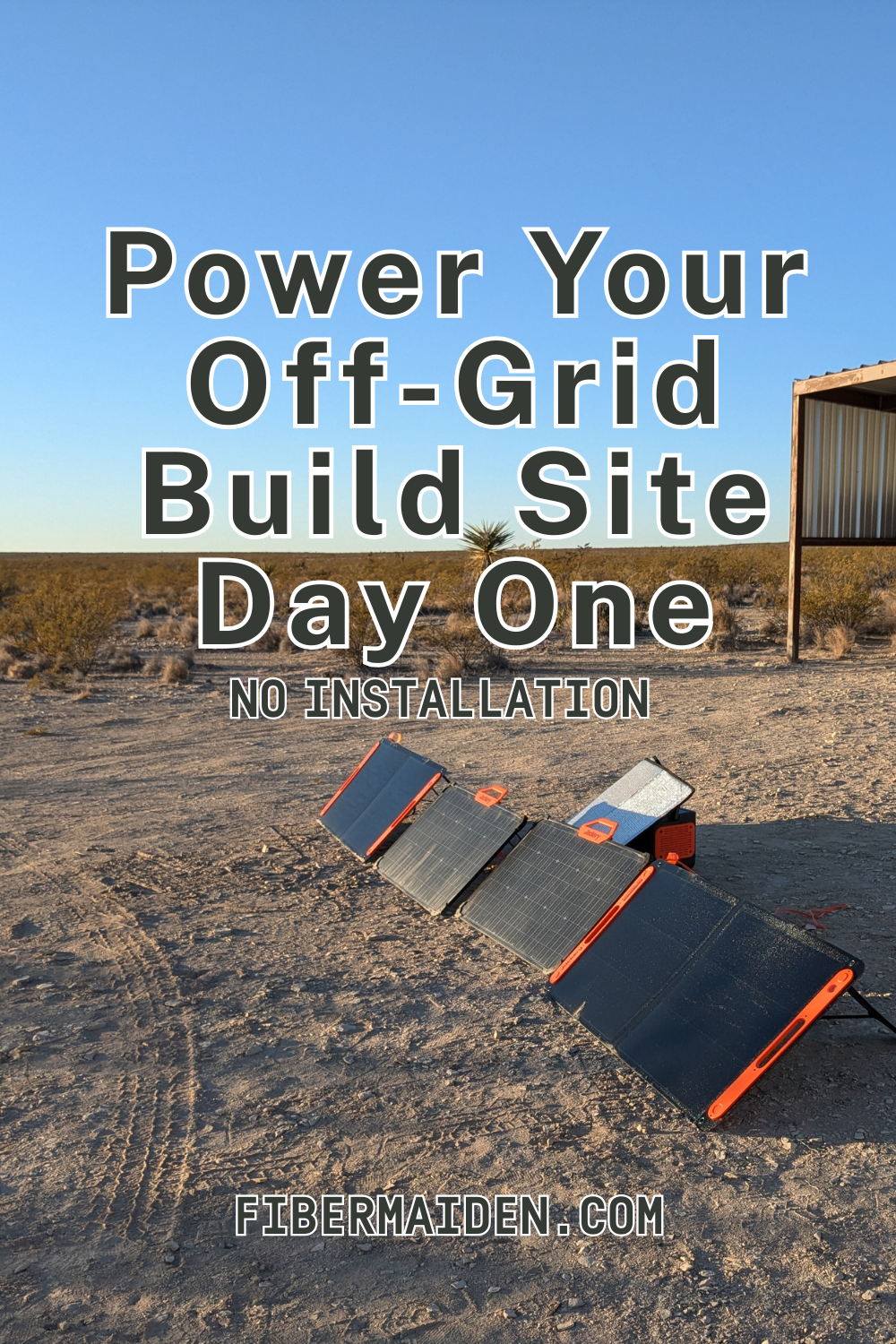
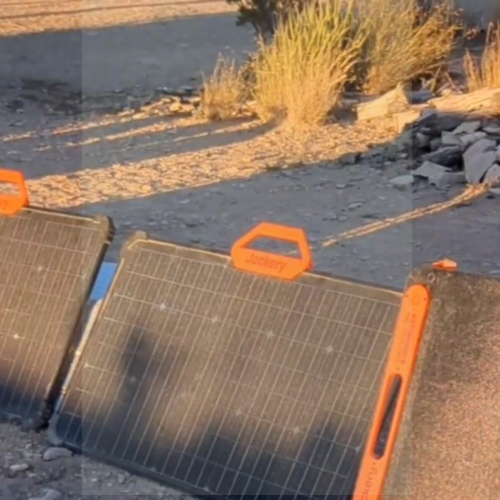
For charging, we're using a mix of Jackery solar panels. We've got two 80-watt Jackery SolarSaga panels and two 100-watt Jackery SolarSaga panels. Out here in the desert with clear skies and intense sun, these panels absolutely cook.
The Explorer 1000 units typically hit a full charge in four hours or less when conditions are good. That quick turnaround is what makes the rotation system work so well. We're never sitting around waiting for power.
The Explorer 2000 Pro takes a bit longer because of its larger battery capacity, but it still charges predictably and fits right into our workflow.
The Backup Plan: Our Dual-Fuel Generator
Solar is amazing out here 90% of the time. But that other 10%? Desert storms roll through, clouds sit for days, or we just have higher-than-usual power demands. For those situations, we've got a dual-fuel generator that runs on either propane or gasoline.
This thing charges our Jackery units fast. Both Explorer 1000s can fully charge in about two hours each, and the Explorer 2000 Pro charges in roughly three hours. When we need to charge multiple units at once or during extended cloudy periods, the generator lets us do that without any downtime. We also use it to run corded power tools on our builds and a portable AC unit when it is over 100 degrees outside.
Having that backup option gives us total peace of mind. We're not dependent on perfect weather, and we can keep working no matter what nature throws at us.
What This System Actually Powers Every Day
Let me be specific about what we're running, because I think a lot of people underestimate what these portable power stations can handle when you use them strategically.
Daily continuous loads:
• Starlink internet running 24/7 for communication and remote work
• LED lighting throughout the evening and night
• Laptops and workstations for content creation and planning
• TV and entertainment system
• Multiple device charging stations
• Tool battery chargers for cordless power tools
Intermittent loads on the Explorer 2000 Pro:
• Small kitchen appliances
• Power tools for construction work
• Any high-surge equipment that needs more starting power
This setup has kept us completely operational during the entire construction phase of our ranch. We haven't had a single day where we couldn't work because of power issues.
Transitioning to Our Permanent 6 kW Solar Array
While the temporary system has been incredible, we're now in the final phases of installing our permanent solar infrastructure. This is what we've been working toward since day one.
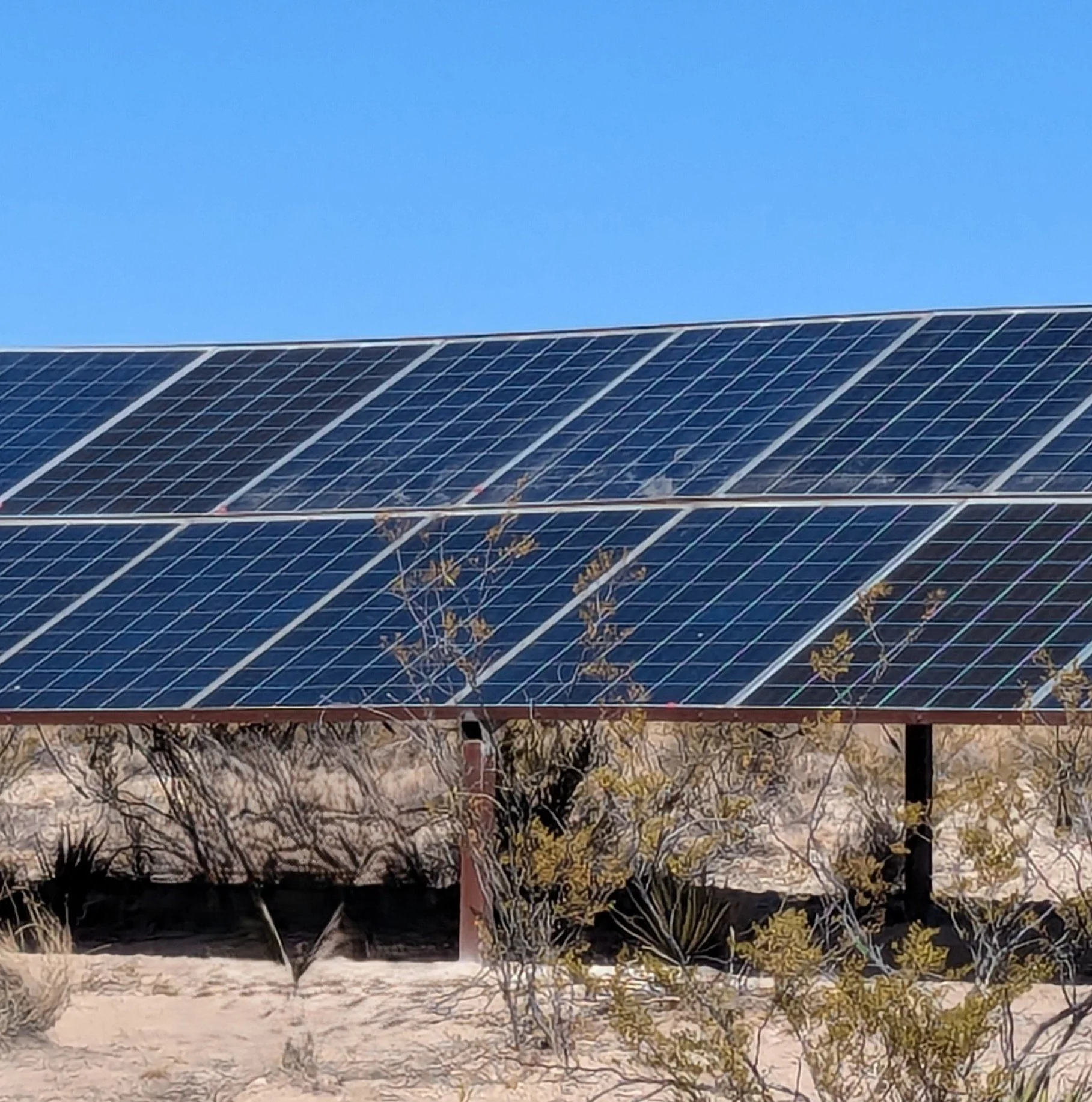
Custom Steel Mounting Rack
We built a custom welded steel beam rack that's engineered to handle the intense desert winds we get out here. This thing isn't going anywhere. It's designed to support our panels for decades, not just years.
24 Full-Size 250-Watt Solar Panels
Each panel is a full 250 watts, giving us a combined production capacity of 6,000 watts (6 kW) under ideal conditions. That's a massive jump from our portable setup and will give us more than enough power to run every building on the property simultaneously.
Inverter and Battery Bank System
We've already purchased the inverter and battery storage system that will tie everything together. Once these components are delivered and installed, they'll connect directly to the breaker panels and circuits throughout the ranch. At that point, we'll have full permanent power infrastructure.
Why a Phased Power Approach Makes Sense
A lot of people ask why we didn't just go straight to the permanent system from day one. Here's why the phased approach worked so much better for us:
1. We Could Start Working Immediately
The Jackery units arrived, we unboxed them, plugged stuff in, and we had power. No installation or waiting. We started making progress on the ranch build that same day.
2. We Learned Our Actual Power Needs
By using this temporary system for years, we got real-world data on how much power we actually use. That knowledge helped us size the permanent system correctly instead of guessing and potentially over or under-building.
3. We Reduced Generator Runtime and Fuel Costs
Without the Jackery solar setup, we would have been running a generator constantly. That means burning through propane or gas every single day. The solar panels reduced our generator use by probably 80-90%, saving us a ton of money and hassle.
4. We Built in Redundancy
Even after the permanent system is installed, we'll still have these Jackery units. They'll serve as portable power sources we can take anywhere on the property, plus they're excellent emergency backup if something ever goes wrong with the main system.
5. We Scaled Power with Infrastructure Growth
As buildings went up and our needs increased, we could add capacity gradually. We started with one Jackery unit, then added another, then the bigger one. It grew with us instead of requiring one massive upfront investment before we even knew what we needed.

Get 3 Free Recipe Sheets
Ready for recipes that don't require a culinary degree to follow? Get seasonal recipe sheets designed for real kitchens and busy lives, the kind that work even when your kids are asking for snacks mid-prep.
What We'd Recommend for Your Off-Grid Build
If you're planning an off-grid build or thinking about how to approach your power strategy, here's what I'd suggest based on our experience:
Start with Portable Solar Power Stations
Get at least one solid power station and some solar panels right away. The Jackery Explorer 1000 is a great starting point. If your budget allows, grab two of them so you can rotate like we do. And definitely pick up a couple of the SolarSaga panels to keep them charged.
Have a Generator Backup Plan
Even with great solar, you'll want a generator for charging during bad weather or for running high-demand tools. A dual-fuel model gives you flexibility between propane and gasoline.
Track Your Power Usage
Pay attention to what you're actually using every day. This will help you size your permanent system correctly when you're ready to install it.
Don't Rush the Permanent System
Take your time. Let your needs become clear before you commit to a permanent solar array. You'll make better decisions and end up with a system that actually fits your lifestyle instead of one you hoped would work.
Final Thoughts on Our Temporary Solar Journey
Our temporary solar system has been way more than just a stopgap solution. It's been the foundation that made this entire build possible. The combination of Jackery power stations, portable solar panels, and generator backup has given us reliability, flexibility, and the ability to keep working no matter what.
Now, as we transition into our permanent 6 kW solar array, these Jackery units aren't going anywhere. They'll continue to serve as portable power assets we can use anywhere on the ranch, emergency backup for the main system, and proof that you don't need to wait for perfect conditions to start building your off-grid dream.
If you're thinking about going off-grid or starting your own homestead build, seriously consider this phased approach. Start with portable solar, learn as you go, and scale up when you're ready. It worked for us, and I think it could work for you too.
Frequently Asked Questions
Our complete setup with two Jackery Explorer 1000 units, one Explorer 2000 Pro, and four solar panels (two 80W and two 120W) cost approximately $3,500-4,000 total. You can start much smaller though.
A basic beginner setup with just one Jackery Explorer 1000 and two solar panels runs around $1,200-1,500. That's enough to power essential equipment and learn your energy needs before scaling up. Compare that to $15,000-25,000 for a permanent solar installation, and you can see why starting with portable power makes financial sense.
It depends entirely on what you're running. The Explorer 1000 has a 1002Wh capacity, and the Explorer 2000 Pro has 2160Wh.
Real-world examples from our use:
- Running Starlink internet (50-75W): 12-16 hours continuous
- LED lights (20-30W total): 30+ hours
- Laptop charging and use (50-65W): 12-15 hours
- Mixed light use (internet, lights, laptop, charging): 8-12 hours on the Explorer 1000
This is why we rotate two Explorer 1000 units. One runs while the other charges, giving us 24/7 power availability.
Yes, but with some important distinctions. The Explorer 2000 Pro handles most power tools thanks to its higher surge capacity (4400W peak). We've successfully run circular saws, drills, and other construction tools.
The Explorer 1000 units work great for charging cordless tool batteries but struggle with direct high-draw power tools. That's why we use the 2000 Pro for intermittent tool use and reserve the 1000s for continuous loads like internet, computers, and lights.
For heavy-duty construction work all day, you'll still want a generator. But for occasional tool use and all your other power needs, these handle it beautifully.
This is exactly why we have a dual-fuel generator as backup. Out here in the desert, we get great sun about 90% of the time. But when storms roll through or we have extended cloudy periods, solar production drops significantly.
Our generator can fully charge both Explorer 1000 units in about 2 hours each, and the Explorer 2000 Pro in roughly 3 hours. This means even during a week of bad weather, we spend maybe 4-6 hours total running the generator instead of running it 24/7.
The key is having battery storage (the Jackery units) so you're not dependent on active solar production every single moment. You generate power when the sun is out and store it for use anytime.
We calculated that running a generator 8-10 hours per day would cost us $150-200 per month in fuel, plus constant maintenance, oil changes, and the eventual need to replace the generator from heavy use.
With our solar setup, we've reduced generator runtime by about 80-90%. That's saving us roughly $120-180 per month in fuel costs alone. The Jackery system paid for itself in reduced fuel costs within the first year.
Plus, there's the quality of life factor. Generators are loud, produce fumes, and require constant attention. Solar power is silent, clean, and automatic. We can work in peace without that constant background noise.
In optimal desert conditions with clear skies, our Explorer 1000 units charge from empty to full in about 4 hours or less using a combination of our 80W and 120W panels.
The Explorer 2000 Pro takes longer because of its larger battery capacity, typically 5-7 hours with multiple panels connected. But honestly, we rarely run these completely dead. We usually top them off throughout the day, which takes 2-3 hours.
Charging speed depends on panel wattage, sunlight intensity, angle, and temperature. Your location matters a lot. We get intense desert sun, so our charge times are faster than you might see in cloudier or more northern climates.
Lithium batteries (which these use) do lose some capacity in extreme cold, but the Jackery units have built-in battery management systems that help protect them. They're rated to operate in temperatures from 14°F to 104°F (-10°C to 40°C).
We're in the desert, so we deal more with extreme heat than cold. But from what we've researched and heard from others using these in colder climates, you can expect about 10-20% reduced capacity when temperatures drop below freezing.
The key is keeping them from freezing solid. If you're in a very cold climate, consider keeping them inside your living space or insulating them when not in use.
Yes, but it depends on the refrigerator. A standard household fridge draws 100-800W depending on size and efficiency, with startup surges that can be much higher.
We've successfully run a small energy-efficient chest freezer (which we use as a fridge) on the Explorer 2000 Pro. It draws about 60-80W when running and cycles on and off throughout the day. This works because the 2000 Pro can handle the startup surge and has enough capacity to run it for extended periods.
For continuous refrigeration, you'd want to size your system carefully and probably dedicate one power station just to that load. Or better yet, consider a 12V DC refrigerator designed for off-grid use, which is much more efficient.
You're ready for a permanent system when you have clear answers to these questions:
- You know your average daily power consumption (track it for at least 2-3 months)
- Your buildings are in place and you know where panels will mount
- You've identified your peak usage times and seasonal variations
- You're ready to invest $15,000-30,000 depending on system size
- You understand your local permitting and installation requirements
For us, after several months with the temporary system, we had solid data showing we use about 4-6 kWh per day. That helped us size our permanent 6 kW array with confidence instead of guessing and potentially over or under-building.
We're definitely keeping them. These units are incredibly valuable even after the permanent system is up and running.
Future uses for our Jackery fleet:
- Emergency backup power if the main system goes down
- Portable power for remote areas of the property
- Running tools and equipment away from buildings
- Camping and off-property adventures
- Lending to neighbors or friends during emergencies
- Power for outbuildings that aren't connected to the main system yet
Think of them as power insurance and extreme flexibility. Once you have portable power like this, you find countless uses for it.